dbForge 2026.2 adds a built-in PostgreSQL debugger and a smarter AI assistant
Devart's dbForge 2026.2 release brings an embedded PostgreSQL debugger, visual object editors, and a dbForge AI Assistant with file attachments, model choice, and a free Express edition.
Devart released dbForge 2026.2 on Thursday, the latest update to its database tooling suite, with two headline features for developers: a brand-new embedded PostgreSQL debugger and a broader, more controllable dbForge AI Assistant.
Debugging without leaving the IDE
The embedded PostgreSQL Debugger, built into dbForge Studio for PostgreSQL, lets developers set breakpoints, step through server-side code line by line, and watch variables, expressions, and query results as the code runs. When an exception fires, the debugger highlights the exact line that caused it. Devart says it needs no separate extensions or manual setup, which will appeal to teams that have been wiring debuggers into their Postgres workflows by hand.
The release also adds visual editors for PostgreSQL event triggers, functions, and procedures, so teams can create and modify those objects without writing SQL manually.
A more steerable AI assistant
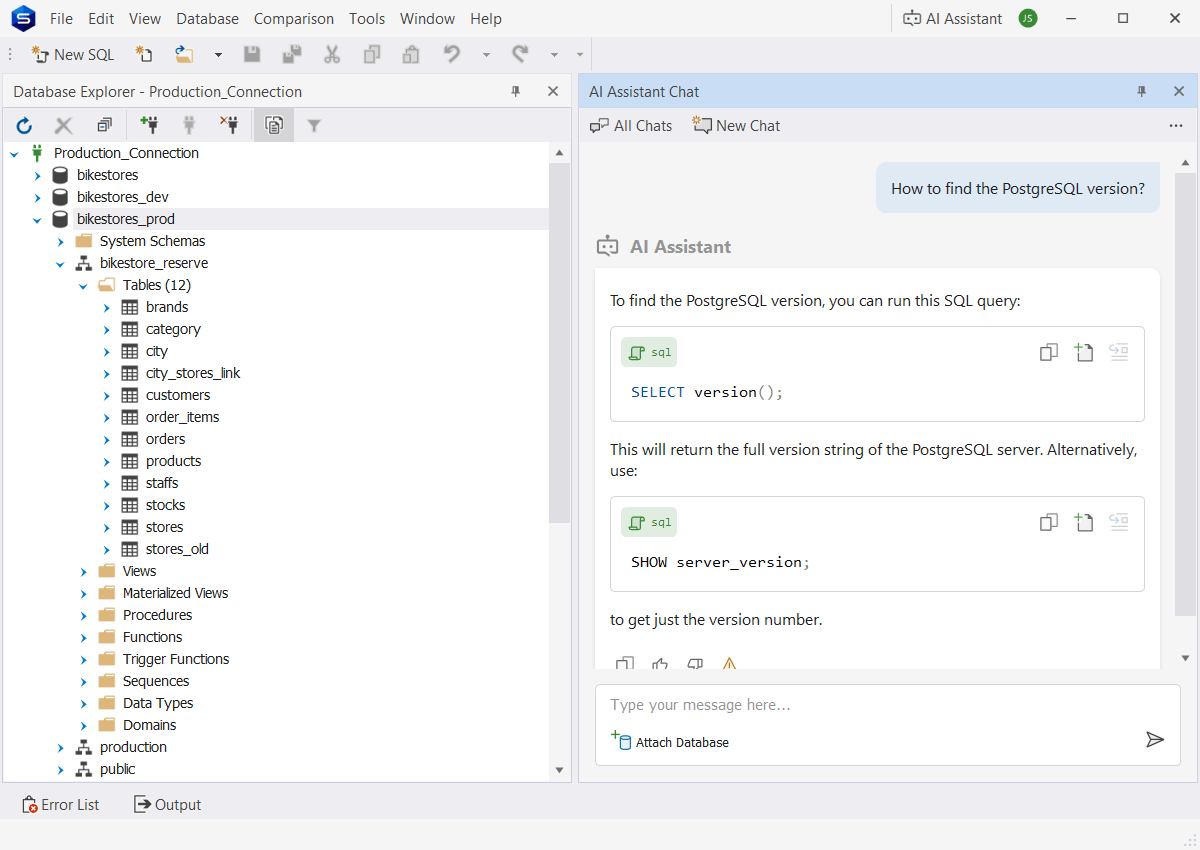
The dbForge AI Assistant gains broader context awareness: file attachments, saved instructions, and model choice across Anthropic and OpenAI models. Devart is also making the assistant available in a free Express edition, a notable move for a tool that has historically been a paid add-on. "The latest improvements to dbForge AI Assistant give users more control over that context, from active documents and file attachments to saved instructions and model selection," said Oleksii Honcharov, Head of Engineering at Devart.
The rest of the release is housekeeping that working database developers will appreciate: SQL refactoring enhancements, quicker access to test data generation, a new "Last modified" column in schema comparison documents and reports, and support for MySQL 26.7 and MariaDB 13.x.
DbForge is a smaller name than the AI-native coding tools that dominate the headlines, but its audience is real: teams that live in Postgres day to day. An embedded debugger plus an AI assistant that can see your attached files is a sensible combination for that crowd, and the free Express edition lowers the barrier to trying it.