Qodo 3.0 brings enterprise governance to the agentic software factory
Qodo's 3.0 release adds a Wisdom Base, PR triage, and a blast-radius map to give enterprises quality control over code written by AI agents.
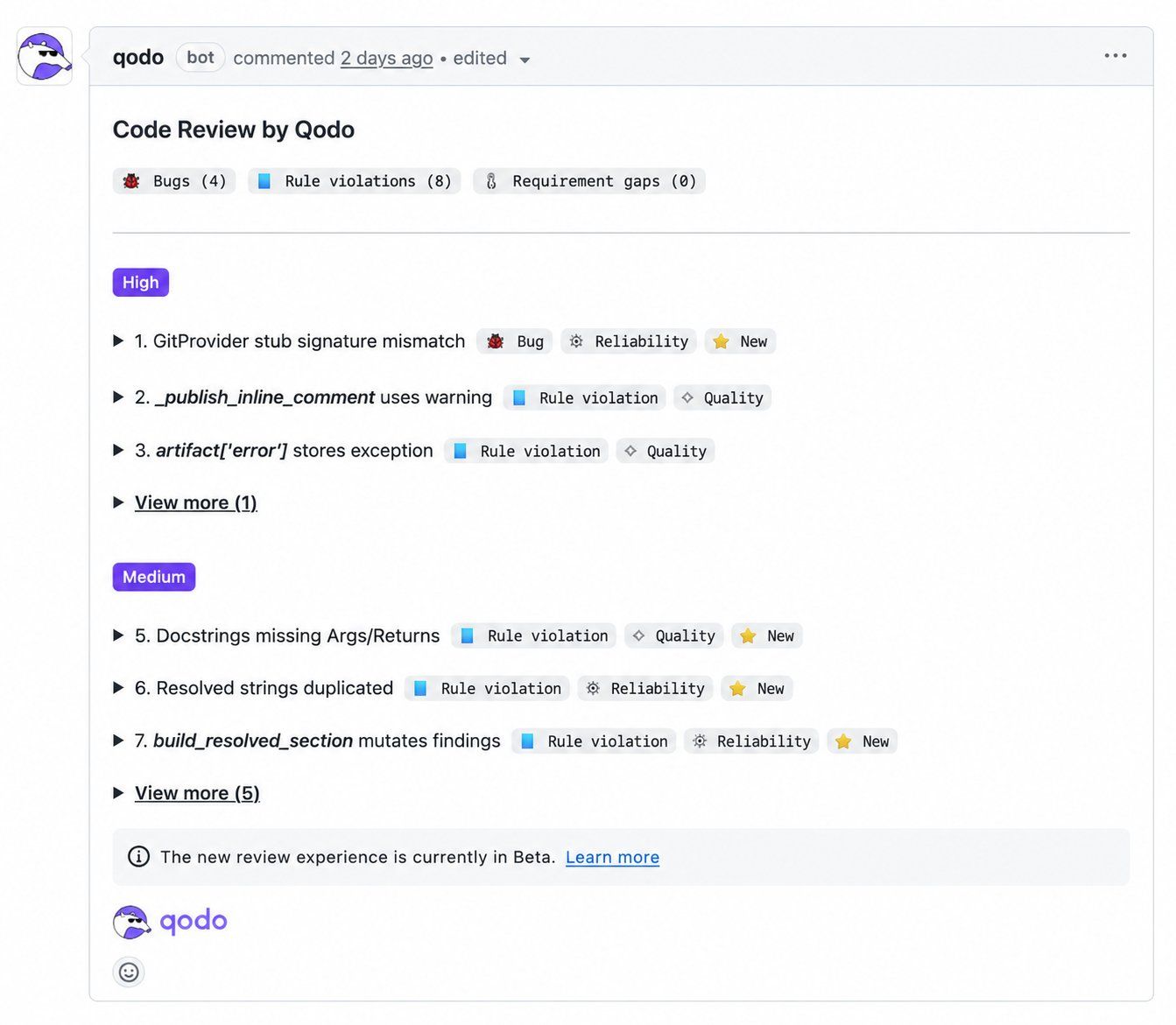
Qodo announced Qodo 3.0 on Thursday, the next generation of its AI code quality and governance platform, pitching it as the quality-control layer for enterprises whose code is now written by agents. The release is aimed squarely at a new anxiety inside engineering orgs: according to an industry study cited in the announcement, 91% of engineering leaders fear losing control of their codebase, with governance and visibility ranked the top risk by almost 30%.
What 3.0 actually adds
The centerpiece is the Wisdom Base, which feeds agents a continuously updated understanding of an organization's codebase, standards, architecture, and pull request history. The idea is that agent workflows get connected to enterprise codebase knowledge automatically, so the code agents produce already reflects the company's own conventions.
Qodo 3.0 also pushes quality checks earlier. Before a pull request exists, the platform surfaces an organization's coding standards into the agent's workspace and runs Qodo's review engine on generated code before it is committed. Once agents do open PRs, a new PR Triage groups them into a single work package, showing reviewers everything a task touches and its priority relative to other work. A reviewer can claim a work package to establish ownership and avoid duplicate review.
A Software Map rounds out the release: it automatically maps an organization's repositories, calculates the blast radius of a proposed change, and surfaces quality issues as a heat map across the architecture.
Where it runs
The platform adds Gerrit to its list of supported code hosts, alongside GitHub, GitLab, Bitbucket, and Azure DevOps. For security-conscious shops, 3.0 supports full on-premises or air-gapped deployment with the Context Engine and Agentic Toolbox inside the customer's perimeter, plus open-source model support including Nemotron, so review can run on models hosted on the customer's own infrastructure.
"Every enterprise will build its software factory around its own systems, tools, and ways of working," said Itamar Friedman, CEO and co-founder of Qodo. "That factory becomes trustworthy when agents can draw on the organization's accumulated knowledge and operate within its standards."
Qodo, founded in 2022, has raised $120 million from backers including Qumra Capital, Maor Ventures, Square Peg, Susa Ventures, TLV Partners, and angel investors from OpenAI, Meta, Shopify, and Snyk.
One caveat: today's announcement is a vendor press release, so the claims about effectiveness and adoption come from Qodo itself. The broader trend it points to is real, though. As agents take over more of the software development lifecycle, the companies selling to enterprises are shifting from "faster code generation" to "governed code generation," and quality infrastructure that assumes human authorship is no longer enough.