OpenAI's DevDay 2026: always-on Dots, Codex Security Cloud, and the new GPT-6.1 Sol
OpenAI unveiled more than 20 products at DevDay 2026, led by always-on Dots agents, Codex Cloud and Security Cloud, the GPT-6.1 Sol model, and a paid Ultrafast speed tier.

OpenAI spent roughly two hours at Fort Mason in San Francisco on Tuesday doing something it had not quite done before: turning the developer conference into a product launch conveyor belt. DevDay 2026 produced more than 20 announcements, and the ones aimed at developers are substantial enough that they will reshape how coding tools get built this year.
The headline is Dots, always-on AI agents that live inside ChatGPT. A Dot gets its own cloud computer and browser, connects to more than 4,000 applications, and keeps working toward a goal after the chat ends. You message it in ChatGPT, Slack, or Teams. Dots learn from feedback over time and carry session context across apps and devices. OpenAI says conversations with a Dot do not count against subscription usage limits, though the tasks a Dot runs in Codex or ChatGPT Work do. Dots are rolling out to Pro and Business Premium subscribers in eligible markets, with an admin-approved beta for Enterprise, Edu, and Healthcare customers. OpenAI also says unprompted Dot work is restricted to read-only access, with automatic review gates on anything that touches user accounts, plus an activity dashboard so you can audit what your agent did while you were away. Those are vendor claims, not independently tested behaviors, and they matter more than the feature list.
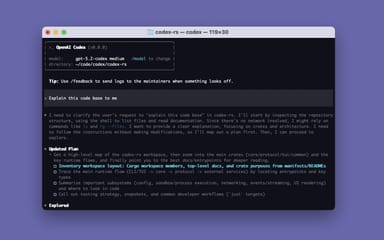
For developers, the Codex announcements are the meat. Codex Cloud keeps tasks running with your laptop closed, accessible across devices. The Codex CLI gets two-way voice interaction, a new /agents view, and reworked prompt editing, session resumption, and worktree flows. Code Review moves into the ChatGPT desktop app with summaries, diffs, and the ability to ask questions about changes, and automatic reviews can run in the cloud. And there is Codex Security Cloud, which scans repositories for vulnerabilities, investigates findings, removes duplicates, and prepares fixes, with scans able to run on a schedule. Automatic security fixes are exactly the kind of thing that sounds great until one ships a subtle backdoor, so the interesting question is how much of this runs unattended by default.
Sol is the new everyday model
OpenAI also introduced GPT-6.1 Sol, described as near-Astra intelligence at roughly one-fifth the price. Standard API pricing is $2 per million input tokens and $10 per million output tokens, and OpenAI says Sol improves on coding and computer use. This lands one week after the company rolled out GPT-6 Astra, and one day after it scrapped the planned GPT-6.1 Astra release over safety concerns.
Speed gets its own product line now. Ultrafast is a paid inference tier available in ChatGPT, Codex, and the API, with OpenAI claiming up to 8x faster token generation in Codex and 6x in the API. Astra supports it today, Sol support is coming later. A new $500 per month Pro tier bundles 25x the Plus usage allowance with Ultrafast access, and OpenAI quietly reopened the $200 Pro tier, reportedly with reduced usage limits.
On the API side, the Agents API went into public beta with hosted execution, memory, tools, and multi-agent support, including computer use that lets agents operate software through its UI. A new Decisions API, built on the Luna model, handles fast single-choice tasks like classification and routing in limited preview. OpenAI also announced Bedrock Managed Agents, which run OpenAI-powered agents inside AWS, and Private Intelligence with Private Safety Processing plus a Private Inference preview planned for fall.
The rest is distribution. ChatGPT Space is a shared workspace where teammates and Dots collaborate. Sign in with ChatGPT lets third-party products tap subscription usage, starting with 16 partners, and plugin extensions get richer, with Figma and Adobe showing integrations.
The strategy is clear. Dots make agents continuous instead of conversational, Codex Cloud makes coding agents independent of your laptop, and the API stack gives developers the pieces to build the same thing themselves. The question, as always with agents that run while you sleep, is how much you will trust what they did overnight.
Sources
OpenAI developer announcements thread · Reuters on Dots · The Register on Dots pricing and availability · AI Daily Post on Codex