IBM brings its Bob coding agent behind the firewall with self-hosted deployment
IBM Bob's new self-hosted option runs the agentic coding platform on-premises, in sovereign clouds or fully air-gapped for regulated industries.
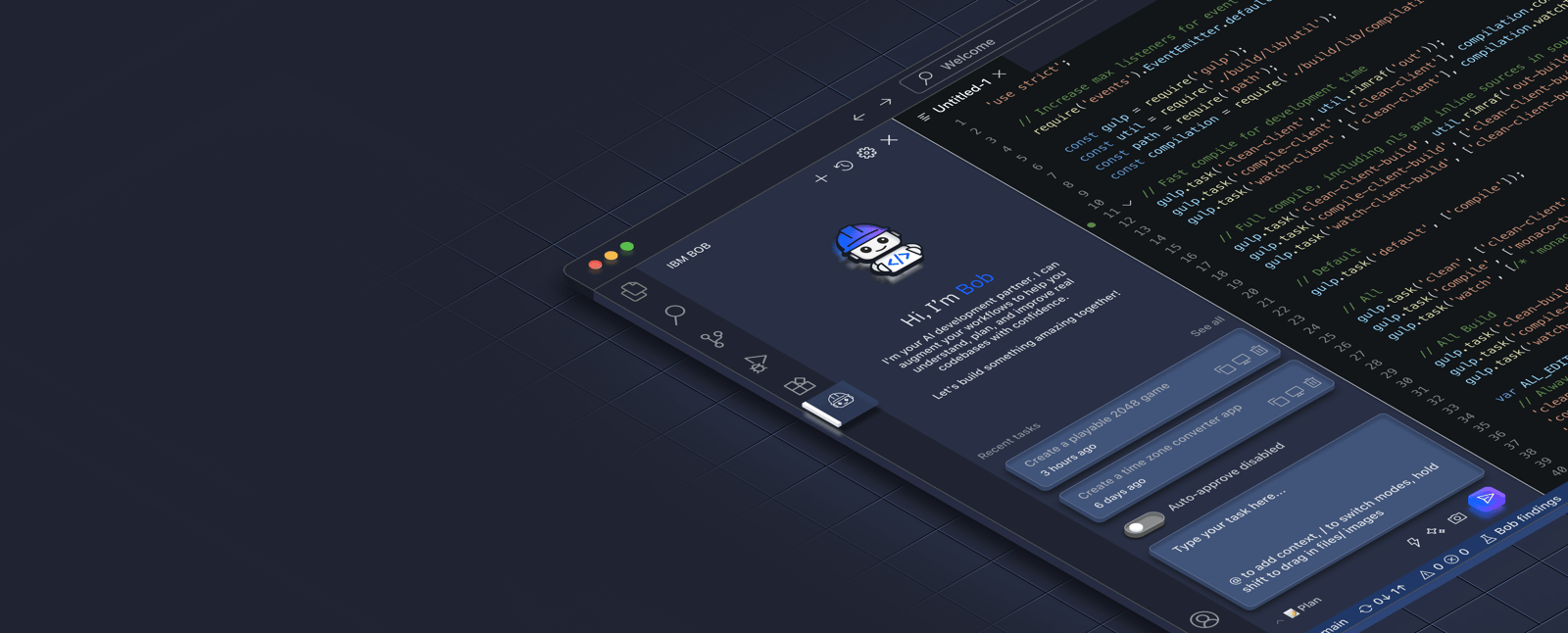
IBM announced the general availability of self-hosted deployment for Bob, its agentic software development platform, on October 1. The option lets organizations run Bob on their own servers, in a private or sovereign cloud, or fully air-gapped with no outside network connection, targeting banks, governments and other regulated industries that will not send proprietary source code to a third-party AI cloud.
"The future of enterprise AI will depend on security, governance and sovereignty," said Neel Sundaresan, GM of AI and Automation at IBM. "Organizations need AI that operates inside environments they have control over, especially when working with sensitive code and regulated data."
The announcement cites a Futurum Research projection that hybrid and edge deployments will capture 44 percent of the AI infrastructure market by 2030, and IBM's own Institute for Business Value research from June 2026, in which 68 percent of surveyed executives said meeting data residency and sovereignty requirements across geographies is challenging.
At GA, customers bring their own supported model. Self-hosted options include NVIDIA Nemotron and Poolside Laguna; hybrid configurations connect to external model services including Claude Sonnet 5.0, Claude Opus 4.8, Gemini 3.7 Flash and OpenAI GPT 5.6 Sol. A bring-your-own-license approach lets enterprises build on existing model investments, and IBM says multi-model routing is on the roadmap. The self-hosted version keeps the core Bob experience: the IDE experience, BobShell, parallel tool calling, agent harness, skills and modes.
IBM is also leaning on its own deployment as evidence. The company says more than 80,000 IBM employees now use Bob, with surveyed users reporting an average 45 percent productivity gain across modernization, security and new development work. The specific case numbers are striking: developers on the IBM Instana team reported a 70 percent cut in time spent on selected tasks, about 10 hours a week per person, and one legacy modernization effort originally estimated at nine months for a team of 14 engineers was finished in three days. A separate consulting case with Blue Pearl compressed a routine 30-day Java upgrade into three days, saving more than 160 engineering hours. All of these are IBM's own reported figures, not independent measurements.
The trade-off is operational. Air-gapped deployment means the customer's own infrastructure team patches, scales and monitors the agentic system, and IBM's hybrid option quietly admits that fully sealed-off AI is not always practical even for its own customers.