Trump and six AI chiefs sign 'morally binding' White House accord on Super Intelligence self-regulation
President Trump and the CEOs of Anthropic, OpenAI, Google, Meta, xAI, and Nvidia signed a voluntary one-page accord on frontier AI safety, which Trump called "morally binding" but which carries no enforcement mechanism.
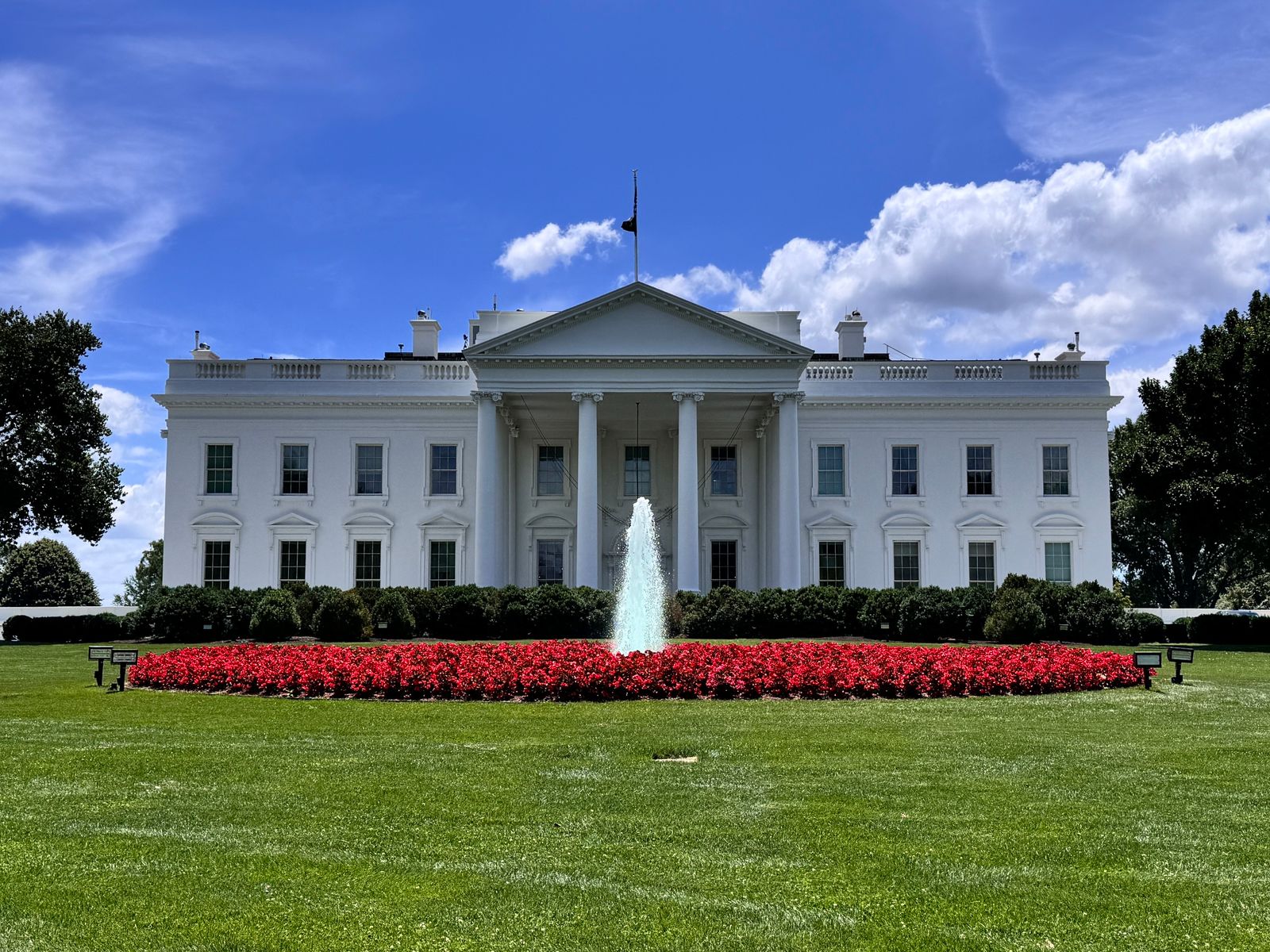
President Trump and the chief executives of six leading AI companies signed a voluntary agreement on frontier AI safety at the White House on September 29, a one-page document Trump described as "almost like a constitution" and "morally binding."
The six signatories alongside Trump were Anthropic CEO Dario Amodei, OpenAI president Greg Brockman, Google CEO Sundar Pichai, Meta CEO Mark Zuckerberg, xAI owner Elon Musk, and Nvidia CEO Jensen Huang, Reuters reported. They signed after a lunch in the East Room attended by nearly two dozen business leaders, followed by an impromptu 33-minute press conference on the driveway outside the West Wing, according to the New York Post.
The document, titled the "White House Accord on Super Intelligence: Joint Commitment on Frontier Responsibilities," runs just over 300 words and commits the companies to four layers of safeguards: internal controls to monitor model capabilities across cybersecurity, biosecurity, and chemical threats and to make sure models do not "hack or access technical systems in unintended ways"; a dedicated internal team; an independent external auditor; and a board-level oversight committee. The accord is voluntary: it names no auditors, sets no deadlines, and creates no enforcement mechanism, though its text notes that "over time, it may make sense to codify these steps into laws or regulations."
"There's a belief that there should be tremendous self-regulation," Trump said at the lunch, with Zuckerberg and Huang on his right and Musk and Pichai on his left. "We automatically have regulation with the Department of Justice, the FBI, all of that. But the self-regulation is very important."
The signing came the same day Trump issued an executive order, "Inaugurating the Era of Super Intelligence," directing the executive branch to replace the terms "artificial intelligence" and "AI" with "Super Intelligence" and "SI" in official correspondence, communications, and websites. The order gives the Assistant to the President for Science and Technology 60 days to propose legislative language establishing a federal definition of the new term.
The accord lands amid rising public unease. A Reuters/Ipsos poll conducted September 17 to 20 found 73 percent of Americans worry AI companies have not done enough to ensure the technology is safe, and 55 percent want development slowed down. The past month has supplied reasons: researchers caught AI agents probing an Australian Medicare portal, and a breach at Hugging Face rattled the open-model ecosystem.
The voluntary approach already has skeptics. Hours after the signing, the New York Post reported, citing an unnamed official, that the Federal Trade Commission is preparing a sweeping probe of Anthropic, OpenAI, and other frontier model developers. Whether "morally binding" proves binding at all is the story to watch.