Docker takes agent sandboxes to the cloud with per-second microVMs
Docker Cloud Sandboxes move agent microVMs off the laptop: per-second billing, 1 to 16 vCPUs, an sbx move CLI, and a Kits spec headed for the CNCF.
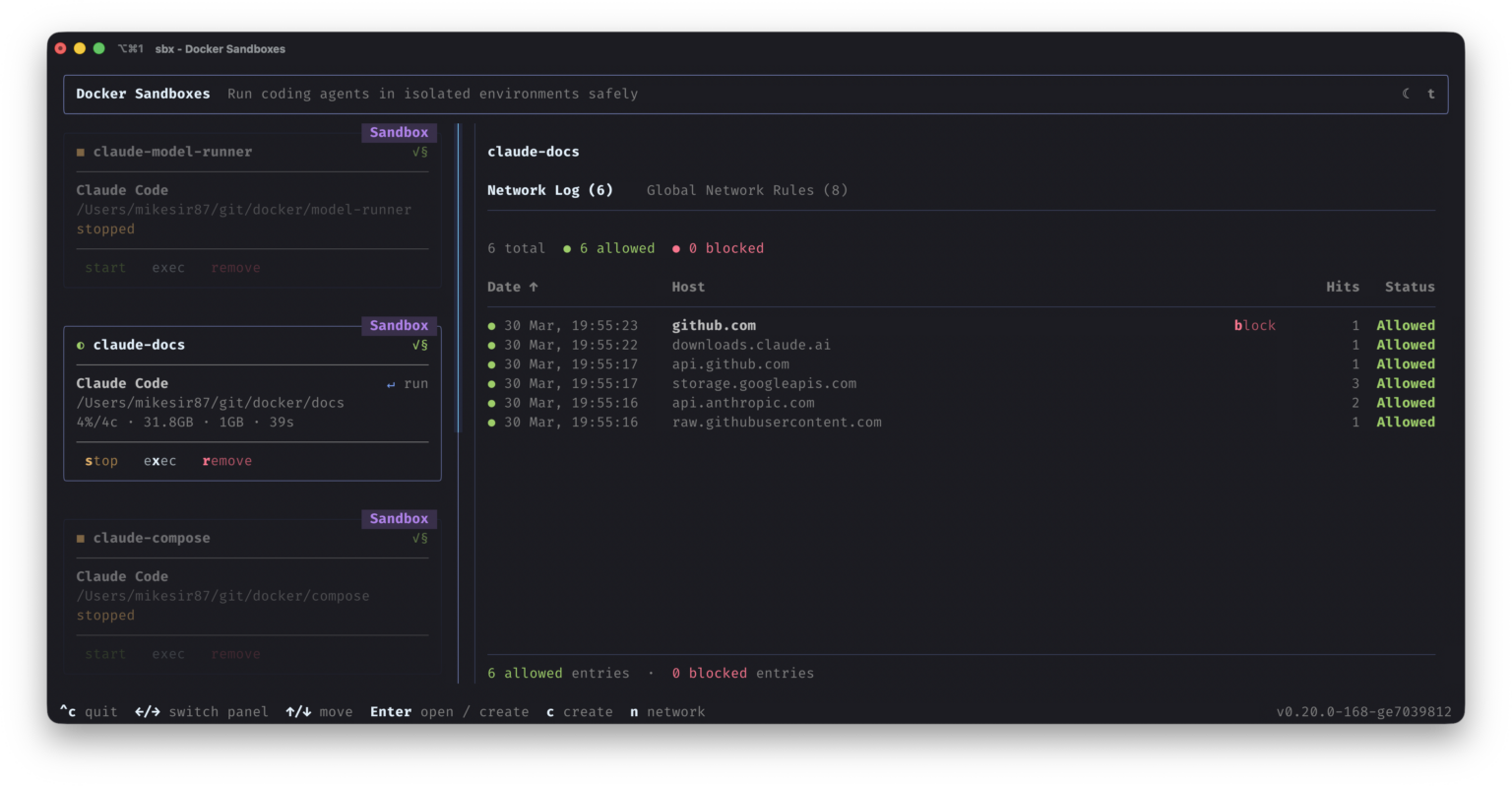
Docker is moving its agent sandbox story off the laptop. At WeAreDevelopers North America on September 24, the company announced Docker Cloud Sandboxes: cloud-hosted microVMs on Docker-managed infrastructure that give coding agents an isolated place to run, with per-second billing, 1 to 16 vCPUs per sandbox, and scale-to-zero when idle.
The pitch is aimed at teams running agents in CI or production, where a local sandbox is either a security problem or a capacity problem. Cloud sandboxes keep the same trust model as Docker's local sandboxes, so a workflow built locally should behave identically in the cloud, and a new sbx move CLI command shifts an existing local sandbox to the cloud without rebuilding it. Docker handles patching, updates, and scaling, which removes the part of sandbox infrastructure nobody wants to own.
The more interesting piece is what Docker calls Kits: composable environment definitions packaged as OCI images, so an agent's whole toolchain (runtimes, MCP servers, credentials) becomes a versioned artifact you can share and audit. Docker says it plans to donate the Kits spec to the CNCF, which would make it a genuine standard rather than a Docker-only format. That is the right move if the company wants Kits to become the unit of agent environments the way the Dockerfile became the unit of app environments.
The same day, Docker's partner BAND announced deeper integration: a Python kit, outbound WebSocket support, and collaboration primitives like rooms and @mentions for multi-agent setups, plus Chainloop attestation so third parties can verify the artifacts an agent produced. That last part matters more than it sounds: as agents write and ship code, proving what ran where is becoming a compliance requirement, not a nice-to-have.
What to watch: pricing and limits in practice. Per-second billing is friendly on paper, but the real comparison is against just running agents on your own cloud VMs or on competitors' sandboxes. Docker's edge is distribution: millions of developers already have the CLI and the mental model. If sbx move is as boring as it sounds, adoption could be fast. The open question is whether Docker can run this infrastructure at margins that make sense, and whether the CNCF donation actually happens.
The sandbox market is getting crowded: E2B, Modal, and Daytona all sell isolated compute for agents, and hosted CI runners are the default for many teams already. Docker's bet is that the sandbox should be boring infrastructure rather than a platform decision, and that the winning interface is the one developers already have installed. That argument has worked for Docker before. What it has not yet proven is that it can operate cloud infrastructure at a scale and margin that makes per-second microVMs a real business instead of a loss leader for platform seats.